
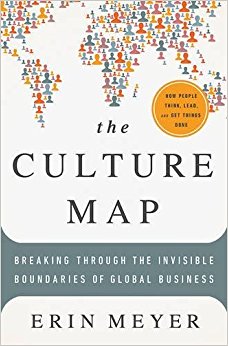
Having lived and worked overseas for nearly 15 years, The Culture Map by Erin Meyer has given me a whole new perspective about what it means to live and work in different cultures. I have always considered myself culturally sensitive with the ability to thrive in different countries around the world. Even so, I wish I would have read this book years ago. Yes, the book absolutely does stereotype and place people from different cultures into their own cultural boxes (made clear by the author), but I found so many of them to be quite spot on. Although I don’t fit the typical “American” stereotype with every example, I can see how the way I act and the things I do are based on the fact that I am American and my upbringing from family, schooling, and cultural nuances.
In the final pages of her book, Meyer states, “The way we are conditioned to see the world in our own culture seems so completely obvious and commonplace that it is difficult to imagine that another culture might do things differently” (244). This could not resonate more with how I view the world both professionally and personally. There are ways that I conduct meetings and interactions with others in the workplace that are based on my own cultural upbringings rather than taking into full consideration the number of people I work with from different nationalities. Meyer gives example after example throughout her book of how different cultures approach some of the most difficult and complex skills, including; communicating, evaluating, persuading, leading, deciding, trusting, disagreeing, and scheduling. The different countries where I have lived and worked as an educator (United States, Ecuador, Thailand, Myanmar, Korea, and China) fall on very different sides of the spectrum in just about every one of these categories. I have found that I have thrived and faltered in different categories, in different countries, at different times.
Knowing that culture has a profound impact on how I see the world, the first thing I’d like to specifically focus on is truly taking the time to understand the other cultures where I live and work. I can’t change my cultural upbringing (and not that I want to), however, I can be more in-tune with other cultures and shift my thinking and approaches from time to time. After all, I currently live and work in China and am a guest in their country. Hopefully once I start to identify what truly makes another culture different from my own, we can begin to listen, share, learn, and understand one another.
Lastly, it is extremely apparent the importance of having clear guidelines, roles, responsibilities, and expectations when working with people from different cultures. If it is possible that many leaders sitting in the same room together have different thoughts and values on the 8 skills listed above, which I believe is the case, then we need to be even more intentional on how we conduct business and interact with one another.
I highly recommend this book for people living and working across diverse cultural contexts.
 Matthew Johnson