Learning Through Challenges

plan-reality

More often than not, life doesn’t turn out exactly as we have planned…and that’s okay!

It’s impossible for me to count the amount of times that I have gone into a conversation, meeting, or situation certain of a particular outcome and have come out of the other side with an entirely new perspective. Although not always easy to swallow, especially when these outcomes have taught me about humility, they have helped to move me forward and have shaped who I am as an administrator, husband, friend, and daddy. Life throws us curve-balls all the time and rather than stepping out of the box, afraid of getting hit, we often need to step right in and make connection.

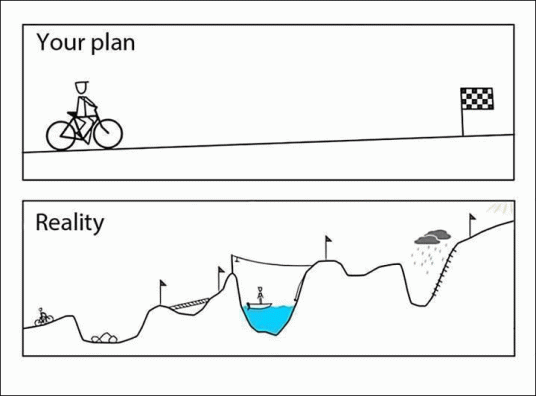
Although sometimes we’d like for our path to be clear and straight and easy, the truth is that we learn the most important lessons and skills when the road is challenging. It is during these times that we learn important lesson of perseverance, humility, and grit. It is necessary to continually adjust our expectations to meet the demands and desires of the new path. This isn’t easy, but is extremely beneficial in building positive relationships and moving forward.

In the diagram above my favorite “obstacle” is the zip-line across the canyon with the boat ready and available on the water. It reminds me that we often have more than one path to move forward and either path that we choose will move us closer to our goal. At first we may only see one option (the zip line), but as we continue along the path and need to change routes, another option comes into play (the boat) and we have adjusted our plan.

In the words of Emerson, “life is a journey, not a destination.”

Mid-Year Reflection

goals

Approximately half-way through the school year is a good time to not only reflect, but to be intentional and strategic in setting goals that will guide my work and actions for the remainder of the school year. Building positive relationships is an important aspect of my role as administrator and I want to focus my goals on building better relationships with students, parents, and teachers.

  1. My first goal is to be intentional about learning student names. I interact with students all day long and learning more student names will allow for more positive interactions. As the assistant principal, I am often tasked with dealing with discipline problems and supporting students to make positive choices. As a result, students don’t often want to be sent down to my office. There is a certain comfort that comes with people addressing you by name and I want to make this a priority in all my interactions with students.
  2. To build on my first goal, I need to be more proactive with getting out to recess more often. During my time on the playground and sports field I want to positively interact with students and build those relationships outside of the classroom setting. The simple act of being present more often can go a long way.
  3. For my third goal I need to find ways to be more involved in the classroom with students and teachers. I often walk-through classes during the school day, however, I want to start spending more time in classrooms. Not in the sense of evaluating teaching, but more to spend time with students while supporting the teacher with instruction and/or conferring with students. This will provide me the opportunity to be more involved with classroom activities while also building on my first goal.
  4. Finally, I plan to attend more team meetings to have a better understanding and big picture of upcoming events and activities at different grade levels. Although I will be unable to attend all meetings, I am excited to get involved more often and continue to build positive relationships with teachers.

As you reflect on your position and role, what are some of your goals for the remainder of the school year?

The Importance of “Co-“

co-create-learn-and-work

Working in individual silos (classrooms) is no longer acceptable in today’s schools. In order to maximize teacher instruction and student learning we must work together in building, cultivating, and expanding our learning environments.

“Co-Learn”: If you were to walk through the halls of Shekou International School, you would find students working and learning together in flexible learning spaces. Rather than individual desks in rows, students are working in groups on high tables with wheels, on couches and bean bags, as well as in hallways and outdoor spaces. Open spaces have made learning visible with windows instead of walls and a transparent culture where teachers share their teaching and learning on Twitter.

As educators we must do our part in preparing students for the future. Companies and businesses are looking for people that have the capacity to work well with others and problem solve as a group. The ability to co-learn must be a priority for all.

“Co-Work”: I remember my first few years of teaching when I entered my classroom on the first day of school and rarely shared ideas of strategies with colleagues. There was a small window on the classroom door and the only time I really had a visitor was for an official evaluation from the principal.

Today, whether in teaching teams or administrative teams, we strive to use the individual strengths of all members of the team and to work together as a collective unit. During grade level meetings, staff meetings, or leadership meeting, we need to spend more time listening than talking and realizing that more often then not, “we are not the smartest person in the room.” Building on the ideas of one another to come up with the best possible solution will enhance the outcome and benefit the entire school community.

“Co-Lead”: I have been extremely fortunate, in my two administrative roles, to have had partners that truly take the term “co-lead” to heart. Both principals, Jeannie Sung and Scott Paulin, have supported me in my transition to administration and were positive role models and examples of good, quality leadership. They afforded me opportunities to take on different challenges and follow my passions. They included me in crucial conversations and, most importantly, allowed me to fail and pick myself up again. Throughout the entire journey they encouraged me and offered both praise and constructive criticism when needed.

In a world where “Co” is more important than “I”, what are you doing in your schools or organizations to build one another up and truly make a collective difference?


Interview Tips

interview

As we are fully engaged in the season of interviewing, for international schools, I’d like to offer a few suggestions on navigating your way through an interview to give yourself the best possible chance at landing that “dream job”. There are a plethora of international schools and all schools will encounter the process a little bit different. Before any interview, fully research the school (website, current teachers, etc.) so that you can make those important connections between your own philosophy and the vision of the school. Lets break down these tips between Skype interviews and in-person interviews.

Skype Interviews

  1. First impressions are extremely important as most people will make their decisions within the first few minutes. This isn’t to say that even if you have a shaky start you won’t be able to redeem yourself, but make sure you make a solid first impression! I’d recommend rehearsing your greeting, calling everyone by name, and practicing your introduction. Many schools will have you begin by introducing yourself. Share your professional background, family life, as well as hobbies and interests.
  2. Be fully aware of the background of your Skype call. A solid background in your classroom (or something in your classroom that shows solid learning or creativity), kitchen, or living room is probably best. Please avoid the bedroom.
  3. Dress the part. Even though it is a Skype call and you may not even be at school, you need to dress the part and show that you are serious about the position. When in doubt, overdress for the interview. Rarely do interviewers comment if a teacher is over-dressed, but almost always they will take notice if under-dressed.
  4. Skype interviews are quite stressful and bring people out of their comfort zones, especially if you are the type of person that relies on interacting with and seeing the cues of others. Remember to breath, relax, and take your time! Skype interviews are an opportunity to get to know you a little bit better. Smile, make eye contact, and remember to be yourself.

In-Person Interviews

  1. If you plan on attending one of the upcoming job fairs, be sure to show up early, come prepared, and start practice your two-minute elevator pitch. It is in the first couple minutes that we are often the most nervous when it comes to interviews and presentations…practice, practice, practice!
  2. As you approach the interview table and/or room, stand tall, give a firm handshake, smile, and address by name. This is the confidence (with a dash of humility) that interviewers are looking for in their teaching staff.
  3. Thoroughly reflect upon and consider your values and philosophy of education. As you answer various questions, be sure that your answers always come back to those core beliefs. What are the few things that you really want to highlight in all of your answers and conversations? Collaboration…technology…inquiry based learning…student-centered, etc.? Be clear on your values!
  4. All candidates will begin with the same general answer to this question: why are technology and innovation important in your classroom? The thing that you must do is intertwine one to two examples of how you have implemented that learning and practice in your classroom with students. Interviewers are absolutely looking for a solid knowledge base of pedagogy, however, more importantly they are looking for the practical application that improves student learning.

Best of luck as you go through the, sometimes, grueling and stressful adventure of interviewing. Remember that you are looking for the “right fit”, as this is the place you (and your family) will be living and growing over the next few years!

Moving Forward: A Lesson in Leadership

gap

As an American living and working overseas, I have witnessed the recent political situation affect friends and family both “at home” and abroad. In the midst of all of this turmoil, one example has stood out above the rest and has taught me a lesson on leadership and the importance of moving forward with a positive attitude and commitment to making our world a better place.

President Barack Obama in his address to the world reminded us that, “the presidency and the vice presidency is bigger than any of us…so I have instructed my team to follow the example…and work as hard as we can to make sure that this is a successful transition…we are now all rooting for success in uniting and leading the country…the peaceful transition of power is one of the hallmarks of our democracy.”

As an international school administrator, I want this to be my battle cry as a leader! During difficult times of transition and crucial conversations, I want to be reminded that we are all here for the same reason and that unity and peace are the hallmarks of our daily interactions with students, teachers, and parents. As President Obama so eloquently stated, the positions that we hold are bigger than any of us, and thus we need to lead by example in doing everything possible to support all students and their learning.

During difficult moments, I need to push aside my fear, ego, and biases in order to have a clear focus and vision on what’s important…students and their successes!

Let this be the hallmark of what I do!

#ELC2016 Presentation: Foundational Leadership for New Admin

screen-shot-2016-10-25-at-8-07-28-am

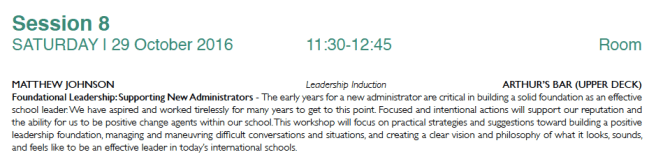
This week I’m very fortunate to be presenting at the EARCOS leadership conference in Kuala Lumpur. The topic of my presentation is Foundational Leadership: Supporting New Administrators. This presentation will be practical and interactive as we work together as colleagues and educators to best support our entire school communities.

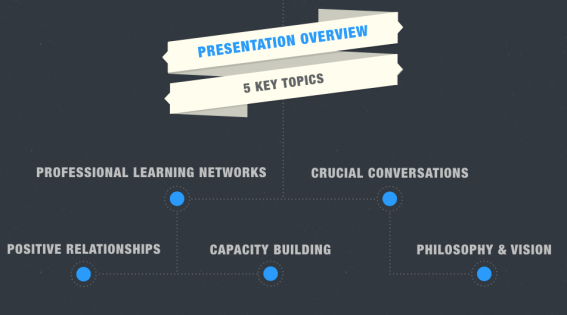
Looking together at the five topics above (building positive relationships, engaging in professional learning networks, building capacity in others, having the crucial conversations, and establishing a philosophy and vision) we will interact with videos, best practice, and one another to ensure that we are establishing a positive foundation as effective leaders in today’s international schools.

Hope to see you there!

screen-shot-2016-10-23-at-8-36-24-pm

Welcoming New Teachers: Part 3 – Check-in and Follow-up

screen-shot-2016-10-16-at-5-04-49-pm

Approximately two months into the school year, new teachers are settled with their classes, curriculum, and the overall understanding of the school mission, vision, and environment. Now is an important time to check-in and gauge their overall feelings and satisfaction both professionally and personally.

Here are a few different options to consider when figuring out the best way to check-in and follow-up with teachers at this stage of the school year:

  1. Host a time at school where you meet with all new teachers in your division after school and have a group discussion/dialogue on how things are going (make sure to supply some snacks and/or coffee).
  2. Organize a more informal gathering at your home (or an outside restaurant) for lunch or dinner. Teachers will probably appreciate this gesture and it will most likely help to build positive relationships.
  3. If available, provide a fun team building outing where new teachers are able to build on their individual relationships with the other new teachers. Nothing brings a group better together than a fun outing (with food!).

Here is a excellent resource to share with your staff about the “Expat Upside-Down Hump.” Our principal Jeannie Sung shares it every year as it is important to understand that many teachers (especially new teachers) will go through this “hump” as they are adapting and adjusting to a new school and country. It is important, as an administrator, to recognize this and to provide support and encouragement to new teachers.

screen-shot-2016-10-16-at-4-51-22-pm

I know that new teachers appreciate the support! Thank you for everything that you do in providing the tools and support that new teachers need to be more effective in the classroom and in life!

Foundational Leadership for New Administrators

reading-story-to-k-kids

For new administrators, the beginning of the school year is a crucial time in building a solid foundation as an effective school leader. An exciting time for students, parents, teachers, and administrators, we are often reminded of the “early wins” and work tirelessly to fully support the entire school community.

As you get your feet settled and find yourself with a better understanding of the calendar, budget, curriculum, and overall school culture, here are a few suggestions on building that foundation as an effective leader in today’s international schools.

1. Get into classrooms as it is here that you will truly be able to understand and be a part of the school culture and climate. This is the best way to be “in tune” with and be able to positively impact solid teacher instruction and innovative student learning. The first time through classrooms, send quick positive notes to teachers and remind them how valuable they are to your school community.

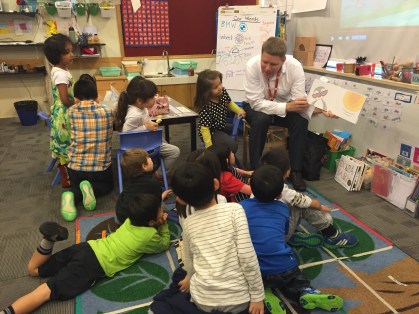
2. Build positive relationships with all school stakeholders. This takes time, but will allow for quality and substantive change as the year progresses. Take a healthy portion of time out of the school day to interact with students, teachers, and parents. Try standing out front of the school during arrival and dismissal and you will be surprised at how quickly you learn student names and interact with all learners.

3. Build capacity in others as you learn the different strengths of your staff. Try to engage in and initiate teacher-led professional learning within your school community. Michael Fullan reminds us that the legacy we leave behind as administrators is not simply our impact on student learning, but rather the number of leaders whom we have mentored and trained to continue the great work that has already been established.

4. Have the difficult conversations with others as these will eventually lead to healthy and respectful relationships within the school community. Opening up respectful dialogue and listening to the thoughts and ideas of others, even if they contradict your own, will lead to a better school environment and a more respectful school culture. During difficult conversations, remember to always focus on what is best for students.

5. Interact with professional learning networks as you continue to grow and flourish as an educational leader. Lurking on Twitter or Instagram is fine, however, get involved and share your ideas and knowledge with colleagues around the world. Start this process through blogging once a month, contributing to weekly twitter chats, and/or presenting at conferences. Finding practical suggestions for improvement and current best practices is only a few clicks away.

As a new administrator, expect ups and downs as you navigate through exciting and difficult responsibilities and expectations; your dedication toward building positive relationships will be important now more than ever. Always remember that you were hired as a capable and dedicated leader. The school will certainly benefit from your collaborative leadership style and positive attitude toward student learning.

First Dayz!

Matt Intro Students

The first day of school is a wonderful time! Students, parents, teachers (and administrators too) are a little excited, nervous, and anxious for the start of the school year and have been working tirelessly to make sure that everything is in order and goes smoothly. As we all go through the ups and downs of the first dayz, here are a few reminders:

  1. Take care of yourself! Our number one goal as educators is to do everything possible to positively effect the lives of students. We are best able to do that when we take care of ourselves physically, mentally, and emotionally. This means something different for everyone, but here are a few ways that you can ensure you are ready for the next challenge: exercise, spend quality time with family and friends, enjoy a glass of wine at the end of a long day, read and/or journal, do a random/thoughtful act of kindness!
  2. Build positive relationships! The longer I am in education, the more I realize that it is all about relationships. Take the time to build those relationships with students, parents, and colleagues. As much as possible, especially when a difficult situation arises, try and think about how you would want to be treated or responded to if you were in the other person’s shoes. Lastly, take that extra few minutes to ask how someone is doing and really be present and listen to the answer.
  3. It can wait until tomorrow! Staying in the classroom, or the office, late into the evening is not always the best strategy. Yes, there are things that need to be completed and now (hopefully not from procrastination), but most things can wait until you get back to work tomorrow morning. Ambition and a hard working attitude are wonderful, but at what cost? So, get out of the classroom or office at a reasonable time and refer back to #1. “Work hard and play hard.”

Crucial Conversations

IMG_4413

I recently finished reading Crucial Conversations by Patterson, Grenny, McMillan, and Switzler. I strongly recommend this book for everyone as it provides practical strategies and advice on how to handle, approach, and get through difficult conversations. On a daily basis we engage in conversations and sometimes these conversations turn crucial (the authors describe crucial conversations as high stakes, strong emotions, and opposing opinions).

Before getting into specifics about the book, my big take-away from this read is that building positive relationships is key to having successful dialogue and conquering crucial conversations. How we initially approach and further react during crucial conversations depends on us and our own willingness to maintain mutual respect and understanding even when emotions are high and difficult things are being said. The authors describe it perfectly when they state that during crucial conversations it is imperative to ask what you really want from the conversation for yourself, others, and the relationship.

In the final chapter they summarize the book into seven principles. Using their writing as the framework, here is my interpretation on crucial conversations and how it applies to my daily life and work.

  1. Start with Heart! In every conversation, I must focus on what I really want (in education, the focus is always on what is best for children and maintaining a positive and respectful relationship with others) and make sure that my actions and words are sincere and have the best intentions.
  2. Learn to Look! It is critical to listen intently and look for when the conversation becomes crucial. Although different for everyone, this is the moment when I might feel threatened or have the instinct to regress and become silent or lash out with accusations and threats. If I can learn to recognize this moment, I do believe that I can take practical steps to control the emotions and positively move forward.
  3. Make It Safe! This is when it is important to apologize when appropriate and try to fix any misunderstandings. Although it is important during crucial conversations that all people involved take steps to make it safe, the reality is that I can only control myself and thus I need to help restore and establish mutual purpose and respect during these difficult times.
  4. Master My Stories! During crucial conversations, we all conjure up and tell stories to match our perspective and point of view. At this point, it is imperative that I separate the facts from the story and make sure that I am moving towards what I really want. I must own up to my role in the problem/situation and then tell the rest of the story.
  5. STATE My Path! In order to open myself up to the views of others, talk about the real issues, and confidently express my own views, I must: Share my facts, Tell my story, Ask for others’ paths, Talk tentatively, and Encourage testing.
  6. Explore Others’ Paths! We all have different perspectives and it is important that all people are able to share their stories and views. As a leader, I must allow for others to share as we move toward agreement and understanding.
  7. Move to Action! Holding ourselves accountable for how decisions will be made and how we will follow up, will largely determine the success of moving through a crucial conversation. If we were able to make our way through all of these steps and come to a consensus, then we need to ensure the appropriate changes were made.

To work through crucial conversations at home and work with family, friends, and colleagues this book is a must read!