Summer Reading!

FullSizeRender

I have picked up a few books for some summer reading! Unfortunately the book I wanted to read first, Crucial Conversations, has yet to arrive. I am excited to read this book as it is important to positively navigate through difficult and crucial conversations. When stakes and emotions are heightened, it is important to learn tools and strategies to move forward in reaching respectful and mutual agreement and understanding. Hopefully this book will arrive soon.

Crucial Conversations

In the meantime, I will begin by reading “Making the PYP Happen” and The First 90 Days.

Many of these books will serve as the framework for my presentation at the EARCOS Leadership Conference in October on the topic of Foundational Leadership: Supporting New Administrators.

What book(s) are you reading this summer?

End-of-Year Reflection

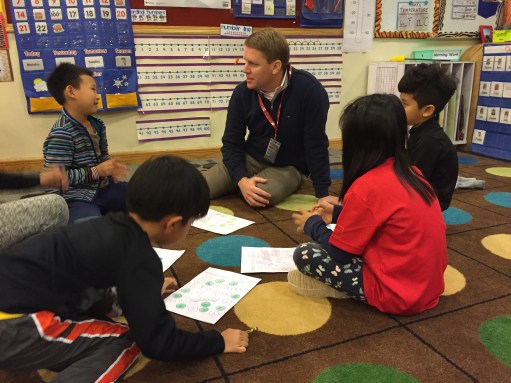
On carpet

It is hard to believe that another school year has come to an end. I have thoroughly enjoyed my first year as elementary assistant principal at Shekou International School and want to take a few minutes to reflect on the year as well as consider areas of growth and focus for next school year!

I am extremely fortunate to work closely with our current elementary principal, Jeannie Sung, who allows me to take on a plethora of challenges and responsibilities as I further my craft and skills as an international school administrator. Having the opportunity to work closely with recruiting, budgeting, scheduling, curriculum, admissions, … the list goes on and on … I truly feel as though I am having an impact and making a difference with student learning and teacher instruction.

  1. As the school year began, one of my first goals was to provide more training and support for our teacher assistants. We have close to 30 teacher assistants in our elementary school and I wanted to make sure that they were fully prepared as instructional assistants in the classroom. At the beginning of the year I asked what areas they feel as though they needed more training and support. Most of their responses centered around support with: working with small groups of students, classroom management, and technology. One of our teacher leaders and aspiring administrator, Amanda Blankenship, took on the challenge of supporting our TAs and offered teacher-led professional learning once a month throughout the school year. Next year we will certainly keep the momentum going and expand and strengthen the support for our teaching assistants.
  2. At the beginning of the school year, I was challenged to increase my online presence and overall reputation within the international school circuit. I began by being more active on Twitter and documenting the wonderful things happening in our classrooms. I interacted regularly with a couple Twitter Chats in order to expand my own professional learning. My first few blogs were intended for my own personal reflection and after a short time I noticed that others were beginning to read my blog as well. I also made an effort to present at international workshops and was able to present on the topic of aspiring administrators at EARCOS and Beyond Laptops. I look forward to presenting this fall at Leadership EARCOS in Kuala Lumpur on the topic of Foundational Leadership: Supporting New Administrators.
  3. Supporting new teachers is extremely important in ensuring a smooth transition and providing the support and resources needed for new teachers to feel comfortable and valued. This process starts as soon as new teachers are hired and continues well beyond their arrival on campus. We are able to provide an extensive induction process for our new teachers and I am grateful that at SIS we have dedicated administrators and teachers with similar goals and values. Much planning goes into welcoming new teachers and we tirelessly work together to provide the best learning and teaching environment possible for our teachers.
  4. Although at times the admissions process can be tiring and time-consuming, having a hand in the process has taught me much about education and the quality and type of students in our classrooms. We are fortunate to have an excellent Admissions and Marketing Director, Liz Jheeta. Her and I work closely together in reviewing student applications and deciding on the proper course of action. First and foremost, the students are always our top priority, and we need to make sure that SIS is the right fit and that we are able to support all student needs. It is certainly exciting to be working in the best international school in the area.
  5. Recruiting is a fast paced and exciting environment and one of the highlights of being a school administrator. There is no doubt that it is stressful and tiring, however, it is a very direct and visible way to truly make a difference with student learning. Hiring quality educators makes all the difference in the world. Again, I am very fortunate to work with a Principal and Head of School that allow me to be part of the entire process. From scanning search databases (International Schools Services), to conducting interviews and reference checks, and finally sending off invitation letters of employment…I am able to be a part of it all. I am also very fortunate to be responsible for the entire hiring process of our teaching assistants.
  6. One of my responsibilities was to help support and lead our standardized testing with both MAP and STAMP. I was able to work closely with our Director of Curriculum and Learning, Carlene Hamley, as we fully implemented the testing in our classrooms. Much time and energy was put into communicating with the different testing organizations, planning schedules and timelines, training teachers, educating parents, preparing students, and making sure that the data is used to inform and improve teaching and learning. As this is the first year we have implemented MAP testing at SIS, we will continue to improve and expand the scope of the testing and its overall impact.
  7. Our core Student Support Team consists of our learning support specialist (Erin Madonna), counselor (Dallin Bywater), and me. I am fortunate to be able to coordinate this fantastic group of educators as we strive to ensure that all students receive the support they need to be successful and flourish. We meet weekly, formally, to discuss concerns and successes as well as to plan our course of action to support our school community. However, the reality is that we have informal conversations and meetings daily to track student progress, provide teaching materials for teachers, and build a solid foundation for our students and school.
  8. The Chinese teaching team and department at SIS is a quality group of educators that care deeply about student learning. They dedicate a substantial amount of time and effort in creating units and lessons and have produced work that has been shared at international conferences. As my responsibility is to help manage and coordinate this team, I spend a considerable amount of time working closely together with them on curriculum, planning, and teaching practices. Our goals for next school year are classroom management techniques, creating clear team expectations, and improving our teaching practices to further support student learning.

Reflecting on the year is also a great opportunity to assess areas of growth and focus for next school year.

  1. PYP! Within the next couple of years, our school will apply for candidacy and begin the process of fully implementing PYP. This is an exciting time for SIS. I taught in both the PYP and MYP while living and teaching in Thailand and this will be a great opportunity for me to readily support and lead school-wide initiatives and overall implementation.
  2. Innovative and creative teaching, learning, and leadership are guiding factors in my philosophy as an administrator. I look to push the boundaries of education and to think outside the box, while holding steadfast to the foundation and core of educational rigor that SIS has established. Next year I will look for new and innovative ideas to bring to the table as we continue to improve teacher instruction and student achievement.
  3. Expanding my own professional learning network will be extremely important in my growth as an administrator. Continuing to Blog, actively using Twitter, and presenting at international conferences are a few of the ways that I plan to strengthen my knowledge and skills and share with others next school year.
  4. A few months back I began the journey of obtaining my Ed.D. in Educational Leadership with a focus on Curriculum and Instruction. This process is a marathon, not a sprint, and through hard work and dedication (with the support of family and friends), I will make my way through the program and use the gained knowledge to have a positive impact on student learning.

Starting With “Yes”

yes

School’s around the world hire talented, well-educated, passionate educators every year to fill open positions. I truly believe that one of our main responsibilities as administrators is to step out of the way and let them serve as instructional leaders and innovators in the classroom!

I believe one of the ways that this happens is by starting with yes!

Imagine a young, dedicated teacher going to an administrator early in the school year with an out-of-the-box idea and the principal says, “yes!” I know, there’s a lot more that goes into this scenario, but lets imagine that the first instinct of the principal is to say yes and then further support these ideas through careful guidance and positive leadership.

Now, imagine the other scenario where a young, dedicated teacher goes to an administrator early in the school year with an out-of-the-box idea and the principal says “no, that’s not possible.” What message are we sending as a school culture and community when our first instinct to new and fresh ideas is not yes?

This reminds me of one of my favorite educational leadership books, Multipliers, by Liz Wiseman. Throughout this book, the author highlights two different types of leaders: multipliers and diminishers. As educational leaders, lets all strive to be multipliers and provide opportunities for teachers, students, and parents to use their full capacity to positively change the people and world around them.

Starting with yes requires intentional planning and follow-through during the entire process. Starting with yes shows confidence and encourages initiative within your school community. Starting with yes allows for teachers and students to excel and bring creativity and innovation into their classrooms.

Once you have started with yes, it is important to then work backwards to get at the root and foundation of the idea. Having a solid purpose and understanding of all factors will enhance group collaboration and overall success.

If you have started with yes, I believe you are well on your way to implementing positive and lasting change within your school community.

Welcoming New Teachers: Part 2 – What Teachers Need and Want

woman-1197497__180

When new teachers first arrive for orientation days, there are a plethora of emotions as they attempt to balance a new country, new school, and new life. As many of us have experienced, we likely remember very little from those first weeks in a new school. My advice; do everything possible to make sure that you give new teachers exactly what they need to feel settled and ready for the first day of school. Have a look at this list of things that teachers want and need before the first day of school with students.

  1. Time in Classrooms: It is extremely important to provide an ample amount of time for teachers to organize and prepare their classrooms. I remember, as a teacher, I would spend the first couple hours simply sitting in my new classroom visualizing the layout before moving any furniture. It is tempting to tell teachers that they need to find their own time at the end of the day or on weekends to organize their classrooms (and this should be made available), but I highly recommend having time during the day as well. At my current school, we organize professional learning so that new teachers have nearly a 1/2 day, every day, to work in their classrooms. *This is also a great time and opportunity for administrators to check in daily with new teachers to answer any questions and show your support.
  2. Curriculum: New teachers need to have access to their curricula early on in the process. Depending upon how you organize curriculum as a school, it is beneficial to send new teachers links to curricula (i.e. Atlas Rubicon) so that they can start exploring. All teachers will explore curriculum at different speeds and thus the earlier you are able to provide this, the better.
  3. Professional Learning: There are certain professional learning sessions that will need to take place within the first few days. As you determine your professional learning schedule in conjunction with the school leadership team, make sure that all sessions are practical, meaningful, and engaging. New teachers have so many things on their mind that it is hard at this stage to stuff in too much extra stuff. Stay tuned for a future blog dedicated to suggestions and advice for providing differentiated professional learning.
  4. Social Outings/Team Building: Please do not forget that new teachers need plenty of opportunity to get to know their colleagues and community. Social opportunities outside of school will provide new teachers a chance to build friendships as well as explore a new city and neighborhood. Nightly dinners, weekend excursions (to local markets or tourist sites), and fun events can contribute to a positive experience. If you can find a leader in your school passionate about supporting new teachers, the possibilities are endless. Here are a few things to try: separate teachers into teams and complete an Amazing Race around the community, rent out a team building Ropes Course for the day, or organize your own morning of team building activities. The goal is for people to get to know one another better and to have fun!
  5. Phones/Internet/Banking/Housing: Depending upon how your school sets up these important “essentials” for new teachers, these need to be discussed and planned out on the very first day. Especially in international schools, new teachers need to feel confident that they will be able to communicate home with family, research the local culture, and use the Internet in the evening to either wind-down or prepare for their students. I would recommend communicating early and often with new teachers on these “essentials”! One of the very first meetings, possibly after a school tour and welcome from the director, should involve supporting and answering questions on the topics of phones, Internet, banking, and housing.

All school communities have a different culture and vibe. When in doubt of what first steps to take in welcoming new teachers, ask your current staff and/or welcoming committee what they would consider essential for new teachers.

Welcoming New Teachers: Part 1 – Getting Started

Weclome hands

Welcoming new teachers begins, if not during the interview process, as soon as they are hired. It is the responsibility of the entire school community to do everything possible to support a smooth, seamless transition for teachers into a new school and community. This effort begins with administration as they provide many opportunities for support and lead by example. This blog series on Welcoming New Teachers will provide practical steps and advice for schools as they either look to improve or begin a quality, meaningful teacher induction program. After all, the first few days in a new school and country are critical for new teachers and can shape a school’s overall reputation and attrition.

This initial blog post will discuss first steps in creating a lasting, effective program for supporting new teachers.

1. Clarity of Mission and Goals – The very first thing that needs to happen is to create clear mission, vision, and goal statements for the program. Begin by asking these questions as a committee: What is the purpose of having a teacher induction program? What do we hope to get out of this program? In what ways will this program support new teachers (and students)? Who will be involved in the program? How does this program align with the overall school mission, vision, and goals? It is extremely important to start with the big picture in order to create a solid foundation for a successful program. Here are some overarching program goals to help your committee get started:

a. to facilitate a seamless transition into the profession and/or school
b. to retain quality teachers
c. to guide professional learning and growth
d. to create a welcoming, nurturing environment
e. to support teacher morale and communication
f. to introduce/socialize new teachers to the staff and community

2. Organize a Committee – I am a strong believer in the intelligence of team and creating a culture of collaboration. Whether or not you are an administrator or teacher leader looking to begin or improve your school’s teacher induction program, it is extremely important to gather a team together that are all passionate about the same initiative. Teachers are an essential piece of the committee as they will be able to recall first hand the strengths of the program as well as suggestions for improvement. Also consider including parents and students at certain times during meetings as they will also be able to support and provide insights to the team (although this will probably come later when the program is more established). At this point, it is important to have a committee chair that will follow-up and hold the committee and program accountable to goals and discussions. This would be a great opportunity for an aspiring administrator to take on a leadership role and to gain valuable experience.

3. Communicate – As soon as new teachers are hired, be sure to communicate early and often. All teachers are a little anxious, nervous, and excited to move to a new school, especially if the change is to a new country. Take advantage of this stage of excitement and begin opening dialogue and answering questions. Inevitably this will calm down a bit as teachers finish their current job and then pick right back up again during the summer and their last few weeks before moving to the new school. Here are a few suggestions for effective communication:

a. Introduce current staff to new teachers, via email, and encourage them to reach out and welcome them to the school and community (especially within the same grade level team)
b. answer any and all questions (consider setting up a forum and place for new teachers to ask questions, where representative from the committee are checking and answering these questions on a daily basis. New teachers often have the same questions and providing this forum will not only limit the amount of time spent answering the same questions, but will also allow new teachers to see a variety of questions that they may not think to ask.)
c. assign a current teacher “buddy” to each new teacher
d. be sure that the visa/travel/contract process in clear from the beginning (although the process may be difficult in some countries, a clear process will relieve teacher stress and show your strength as a school and organization)

4. Orientation Schedule – It is never too early to begin drafting the orientation schedule for new teachers. Much time and effort should be spent going through various drafts of the schedule that best meet the needs of new teachers. As you begin making the schedule there will be many questions and observations that come up to be discussed within the committee. Later in this blog series I will specifically address the ins and outs of making an effective schedule and certain activities and events that should not be missed when creating the orientation schedule.

Whether or not you are looking to start or improve your new teacher induction program, my suggestion would be to jump right in and get started! Mistakes along the way will happen and that’s okay. The goal of the program is to improve year after year in providing a positive experience and seamless transition for new teachers.

Be on the look out for more blog posts in this series!

Aspiring Administrators: Part 10 – Visibility

Reading to K class

Supporting aspiring administrators in their leadership journey is something that drives my daily practice and guides my educational philosophy. As I complete the final entry in this 10 part series on “Aspiring Administrators”, I am hopeful that my readers were able to take bits and pieces from the posts to move forward in their leadership journey. If you were, send me a tweet @int_educator and let me know your biggest “take-away.”

This final post in the series will focus on the importance of administrators being visible within the school on a daily basis. It is only through walking around the school that administrators are able to truly understand and get a beat of the school culture and environment. Have a look at this list of 4 practical ways to be more visible in your school community!

  1. Get out from behind the desk! Either as a teacher or administrator it is important to not be stuck behind your desk all day long. Meetings and paperwork can definitely get you bogged down and thus it is a conscious decision to get up and get moving. It might seem uncomfortable at first, but if you are consistent with getting around in your daily practice then students, teachers, and parents will soon come to expect it from you and you will see and feel the difference.
  2. Get into classrooms and teach! It is important to not forget your days as a teacher and to get back into the classroom from time to time. And I’m not just talking about being in the classroom during a walk-through or for observations (although this is important too)! Something that I would like to do more of as an administrator is actually going in and teaching a lesson. Earlier in the school year I sent an email to the teachers telling them that I would love to go in and support their class in any way possible (teaching, conferring, etc.). A couple teachers took me up on the offer…I think it’s probably time for me to send out that email again. Maybe this time I’ll get a few more responses!
  3. Get to know the staff! One of the best ways to be “in-tune” with the culture of the school is to get to know teachers, students, and parents on a personal level. It is important to have casual conversations with teachers to get to know them better and to break down some of the walls. After all, we are all here for the exact same reason: to do whatever we can to support all students! Start finding teachers in corridors or between classes and ask them how they are doing (not as an ask and go question, but stick around and listen to their response). After you have done this a few times, you might even start referring to their children by their first names and asking about their most recent vacation overseas.
  4. Get to every activity and event! A variety of events are happening at different times throughout the school year: concerts, sporting events, festivals, art shows, dances, classroom celebrations,…the list goes on and on! Do everything possible to show up to as many events as you can. Your presence at the different activities will not only be appreciated by students, parents, and teachers, but you will also get to see some great work and performances from students: the heartbeat of the school.

As I conclude the final post in this 10 part series, remember these actionable steps as you move forward as a positive leader and contributor in your school community:

  1. Express your interest in leadership with administration
  2. Get involved and build your portfolio (start new initiatives)
  3. Establish your core values and beliefs as an administrator

Aspiring Administrators: Part 9 – Online Presence

Screen Shot 2016-03-06 at 7.42.35 PM

Considering that you are reading this blog, it is probably safe to assume that you have some type of an online presence? If not, then it is definitely time to get started! As an aspiring administrator, the standard that you set for yourself in social media will go a long way in supporting and acquiring your first admin position.

I was a late bloomer to social media and definitely tried to avoid it for as long as possible. At one point I could be characterized as that person that still had the flip phone, was not yet signed up for Facebook, and was utterly confused what blogs and tweets were. A few years ago I decided that it was time to test the waters, but rather than simply stick my foot in to gauge the temperature, I dove in head first! Taking that step definitely supported me in getting my first admin position and continues to support my own professional growth and learning on a daily basis.

This post will take you through a few popular social media platforms that you should be using as well as, hopefully, offer a few suggestions along the way for appropriate and positive use.

  1. Twitter – Right now, Twitter is my best source for professional learning as well as for showcasing all of the amazing things happening at my school (#sisrocks). There are hundreds of chats available every week to meet every individual’s professional learning needs. I have committed to one chat a week (#engagechat), but also contribute and/or lurk in a couple others as well. Have a look at this list to find a chat that not only interests you, but also works in your schedule. Another positive aspect of Twitter is the ability to tweet out all of the wonderful teaching and learning happening in your classroom or school (a great way to promote your school). If you have yet to tweet, take a picture of a cool activity in your classroom, write a sentence or two of the learning taking place, and hit “tweet”. The catchier the description, the more people you will draw in. I have found that some overlap of your professional and personal life is okay, but I would recommend to keep most of your tweets strictly professional. Be careful, once you get started it will be an awesome ride!
  2. Blogs – My colleague and mentor, Jeannie Sung, encouraged me earlier this school year to start up a professional blog in order to share my journey and professional learning with the world. It was difficult at first to come up with topics to write and honestly, I felt as though no one would care to read what I wrote. However, over time I have found that not only do I enjoy writing blogs, but people are actually reading and responding to them. It was through my blog that I got started writing on the topic of aspiring administrators and that has encouraged me to take it one step further with presenting on this topic at international workshops and starting to get published in educational magazines. I committed to writing a blog once every two to three weeks, which has helped me remain accountable to my goal. I use wordpress as the platform for my blog (it’s free), but there are many others out there as well. I have no doubt that my blog will be a positive resource for me when I look for future employment.
  3. LinkedIn – This is a professional platform that you can use, similar to Facebook, in order to connect with other educators as well as promote yourself to the world. I have not only used it to make professional connections, but it also serves as a place for me to keep an updated resume. Once you get signed up and fill out all of the necessary requirements, start finding and adding connections. You do not need to update it very often, as I have found that most updates occur when people are trying to find jobs and are looking to expand their network.
  4. Strikingly – I have only recently begun to use Strikingly and am still trying to figure out all of the ins and outs of this resource. I have begun using it as an online resume. Not only am I able to share my CV through this platform, but I can also highlight many other aspects of my professional career that may not be possible with a paper copy of my resume. I also love that this “online resume” can be a living document, rather than the paper CV that sits in my Dropbox. With Strikingly, I can create links to my other social media platforms, share personal presentations, and make a visually appealing resume for future job searches. More and more, as I go through applications, I am seeing links to professional websites. The possibilities to show your own creativity and innovation are endless with personal websites and online resumes. It also shows your ability to understand, manage, and compete in the world of technology.
  5. Slides Carnival – At the end of March, I am going to present at the EARCOS Teacher’s Conference in Manila on the topic of aspiring administrators. I have used Slides Carnival to create my presentation and could not be more pleased with the designs, layouts, and usability of this resource. I strongly recommend that if you are giving a presentation, to have a look at all of the options. It is extremely simple to either download the presentation template to your personal google drive or desktop. One cool feature is the last slide of the template that gives you different symbols and pictures that you can use in your presentation. If you are looking to modernize your presentations, Slides Carnival is definitely worth a look.

Aspiring Administrators: Part 8 – What Schools Are Looking For in Candidates

folders-25133_960_720

It is important for aspiring administrators to know and understand what schools are looking for in future admin. If you have begun your journey of becoming a principal or assistant principal, you need to start thinking about putting yourself in the best possible position to reach that goal. Here is a list of some common things that school’s around the world are looking for in admin candidates:

1. Record of successful teaching (at multiple levels) – If you have been primarily a freshman English teacher and are interested in a high school assistant principal position, expand your knowledge and experience by teaching elective classes for juniors and seniors. The more experience you have at different levels, the better prepared you will be to address the various academic, social, and emotional needs of students, parents, and teachers.

2. Promote within the current staff – The best way to move into an administrative role is to be a successful teacher at your current school, express your interest to the current admin, take on various challenges and tasks, and slide into an available position (it is a little easier said than done, but I think you get the idea).

3. Knowledge and support of school goals and vision – Administrators need to have a clear understanding and knowledge of the school’s mission and vision and be able to articulate it to various stakeholders. You can begin this step now by studying the school’s philosophy and beliefs and making sure they are in line with your current practice.

4. Understanding of various programs and curricula – The longer you are in education and the more experience you have, the more familiar you will be with various programs and curricula. If this is not a strength of yours, begin by reading literature (books, articles, blogs, etc.) and becoming familiar with current best practice. You can also find time to meet with current administrators (principal, curriculum coordinator, etc.) to gain more understanding.

5. Self-starter and initiator (accountability) – As you see different needs within the school, express your thoughts and ideas with admin and begin working with others to find solutions and make positive change. Two things to be cautious of here, are not take on more than you can handle and to make sure that your suggestions for improvement are delivered in a respectful and thoughtful manner.

6. Interest in staying at the school for 3+ years (longevity) – Especially within the international school setting, administrators are expected to stay at a school for 3+ years. If you plan to apply and move into an admin role, you want to be there for a significant amount of time to make positive changes and help move the school forward.

7. Willing to make mistakes and learn from them – It is not the mistakes that define our character, but rather what actions we take afterwards in an effort to learn from them. We all make mistakes and if you do, we need to be willing and able to apologize respectfully and offer suggestions for ways to move forward.

8. Role-model and example – As a future administrator you will be the person to turn to during the good times and the bad. The school community needs to see you present at evening and weekend events as well as engaging with students and teachers during the school day. Begin to set the example today of how you will support and lead others tomorrow.

9. Ability to relate well with others – Building positive relationships, as I have written in previous posts, will differentiate one administrator from another. Positive administrators are  willing to spend the extra time with various stakeholders when needed as well as have a keen understanding of what teachers are going through before criticizing actions or jumping to conclusions.

10. Getting the right people on the bus (the right fit) – Most importantly, you need to make sure that the school you are interested in, is the right fit. Take an adequate amount of time and effort to research the school and determine if the school’s vision and beliefs are in line with your own philosophy. Once a school gets the right people on the bus, they should then work tirelessly to make sure that all of the people are in the right seats (taken from Jim Collins in Good to Great).


10 Practical Tips to Being an Effective and Supportive Administrator

CZOC6ijUgAAIxmR

As a young administrator, I am continually looking at ways to be more effective and supportive to our entire school community. I believe that my role, as assistant principal, is to support the wonderful work that happens daily in and out of the classrooms and then to further ensure that the right people are recognized for that work (students and teachers). Working closely with a variety of stakeholders, our number one priority should always be students and to work tirelessly on their behalf. Have a look at the list below of 10 things that I am currently doing or hope to implement soon into my daily practice.

  1. Visit classrooms every day! We don’t need to visit every classroom every day, but being present in the hallways and classrooms shows our support of the wonderful work being done by students and teachers.
  2. Provide feedback! After visiting classrooms during a walk-through, send a quick 1-2 sentence email or take 1-2 minutes to touch base with that teacher on something that you observed. Make it timely, meaningful, and positive.
  3. Go out to recess! One of the best ways to bond with students and learn their names is to go out to recess and spend some time with them. Go ahead and jump in on that game of soccer or hop-scotch.
  4. Greet students and parents! In the morning and/or in the afternoon, stand out in front of the school and say “hello!” You will be amazed of the difference it will make on the entire school community and culture.
  5. Reply to emails promptly! When parents, teachers, or other community members send an email, they are looking for a prompt response. If you need some time to gather information or formulate a response, a simple acknowledgment of receipt is a positive step forward.
  6. Stay current with best practice! Take the time to read educational books, articles, and blogs. Enhance your own professional learning through engaging with Twitter chats and outside conferences.
  7. Have the difficult conversations! Be sure to have the difficult conversations with different stakeholders as needed. Always approach the conversations with empathy, understanding, and ways to move forward.
  8. Offer an after school activity! Rather than getting bogged down with meetings every day after school, offer an after school activity. It will feel great, once a week, to interact with students and learn/play along with them.
  9. Give teachers adequate time for planning and meeting together! If you do not have a meaningful agenda for the weekly after-school meeting, cancel it and trust that teachers will use that time to better support their teaching and students.
  10. Get out from behind the desk! Wander the halls and be approachable to students, teachers, and parents. Yes, people will come to you with problems and concerns, but the more visible you are the greater the opportunity for positive change.

Photo of SIS Elementary Principal Jeannie Sung

Aspiring Administrators – Part 7: Personal Vision and Philosophy

IMG_2278

As a teacher, I had a philosophy of education. This one page document outlined my teaching philosophy, practices, and hopes for my students. I had it printed for easy access and referred to it often during my first few years of teaching. In a nutshell, it defined who I was as a teacher and the impact I hoped to have on my students.

As an administrator, why should it be any different? I recently attended a workshop with Harvey Alvy that focused on school leadership and, at this conference, he and I spoke at length of the importance for school leaders to be clear of their own personal philosophy and to have it written down. Being clear of my philosophy as an administrator takes me one step closer in ensuring that my core beliefs and vision are at the forefront of daily interactions, discussions, and decisions with all school stakeholders.

The first assistant principal position I applied and interviewed for I was not offered the job. Upon reflection, I know that the main reason I was not offered the position was because I was not clear of my own vision and philosophy as an administrator. I imagine that most people in that room left my interview saying, “That was fine. He had good answers. But we wanted more. Who will he be as an administrator?” Simply put, if I was not clear in that interview of my own philosophy and vision then how do I expect others to be able to know who I am as an administrator and to trust that I can lead and together we can move the school forward?

So, I ask this very important question…what is your philosophy of education as an aspiring administrator (or current administrator)? Are you able to share it with others?

To help you get started, if this is your first time conceptualizing this larger idea, start by listing down those educational beliefs that are non-negotiable.

Here are a few of mine:

  • improving student learning and teacher instruction
  • building a collaborative school culture (the importance of team)
  • supporting teacher leaders and future administrators
  • creating positive relationships with all school stakeholders (listening)

After you have completed your list of non-negotiables, craft your philosophy of administration to match your character and personality. Most importantly, remember that all of your conversations as an educator, with all school stakeholders, should be grounded in and come back to your core beliefs and vision. This will be especially important during difficult and/or heated discussions.

It is nearly impossible to make others clear and confident of your beliefs and ability to lead if you yourself are not able to clearly and confidently articulate them.