Aspiring Administrators – Part 6: Building Relationships

Screen Shot 2016-02-04 at 4.43.12 PM

As an aspiring administrator, building positive relationships with all school stakeholders will guide your reputation and set you apart from other administrators. The respect that you garner from others will allow you the possibility to make significant change within the school community and to be a positive example for all to follow.

Positive relationship building needs to start today! If you have colleagues where the relationship is not that strong due to past grievances or circumstances, find a way to mend those bridges and move forward. Being able to do that today will give you the experience and confidence to do it again in the future. I can almost guarantee, that as an administrator, you will have multiple opportunities to mend broken relationships and find ways to work together and do what is best for the school.

Administrators need to build and maintain positive relationship with students, teachers, parents, staff, the school board, and the greater community. This is not always easy as mistakes will be made, opinions will be varied, and confrontation will be had. All of these different groups, within a school community, will require various needs and a quality administrator will work tirelessly to support all groups while staying firm to the school’s philosophy and mission. If you stay true to your beliefs, are service oriented, genuinely want what is best for the students, and apologize when necessary…you are well on your way to bringing positive change and fully supporting the school community.

———-

Another aspect of relationships for aspiring administrators to consider is how your current relationships with colleagues will change once you become an administrator.

Moving from a teacher to an administrator within your own school can carry significant advantages. Knowing both the school and the community limits the transition time and can enable you to make a significant change in a shorter amount of time. However, along with this comes the complication of current relationships with staff and how this might impact your new role. Teachers will inevitably view you differently and conversations will change. They will be watching you closely to see how you interact with others, if you play favorites (either with people of curriculum areas), and even how you carry yourself outside of school. The conversations you may have once had with these colleagues about the problems within the school, over a beverage at the local establishment, will need to change.

This is not to say that you can no longer go out and spend time with colleagues (I would actually strongly encourage you to do so and to maintain these relationships), but you will need to be more intentional about your actions. These relationships that you have built can be extremely supportive in your new role, but at the same time they can also be detrimental if these people begin to question your integrity and commitment to the greater good of the school. Colleagues will recognize your new role and will understand, and even appreciate, the responsibility and change that comes along with it.
Aspiring Administrators – Part 5: Be a Mentor

Mentor

Following up on my last blog of the necessity for aspiring administrators to find a mentor, it is just as important for aspiring administrators to be a mentor!

One of the most important roles of administrators is to build up leaders within the school. In the world of education there are so many talented and passionate educators, it is extremely important for administrators to get out there within the school community, recognize leaders, and support them in their own professional learning and growth. You can begin this process as a teacher leader…you do not need to wait until you acquire an administrative position!

Most schools have programs to support new teachers and this is the perfect opportunity to “take on” a new teacher and support him/her in their transition to a new school and/or country. By being assigned their “mentor” or “buddy” you will take on the role of supporting them long before they arrive for the first day of school. Naturally they will come to you for support and this seamless transition provides you the opportunity to serve as a mentor.

When new teachers arrive to your school, and you have already supported them and communicated with them prior to their arrival, they will begin to see you as a teacher leader and someone to turn to with questions or support. You will naturally begin to be seen in a different light and respected on a different level within the entire school community. If your school does not already have a system in place for teachers to observe each others classrooms, I would highly recommend this as an initiative that you bring to the table (this could be a great opportunity for you to make a positive change within your school and to gain leadership experience). Non-evaluative, peer observations serve as a wonderful resource and can be a powerful professional learning opportunity for teachers to connect with and learn from one another.

All teachers are mentors and role models to their students. Now is the time for you to find practical ways to also serve as a mentor and role model for your colleagues!

Aspiring Administrators – Part 4: Finding a Mentor

Mentor

Finding a quality mentor that can support you in your journey toward administration is one of the most important things that you need to do!

So, how do you find one? Follow this process and you will be on your way…

  1. In my very first aspiring administrators blog post I highlighted that the first thing you need to do is to tell others about your goals and ambitions. When searching for a mentor, you need to express your interest to a possible mentor “candidate” and see how he/she responds. Gauge body language and engagement to see if this person is going to be the right fit. More often than not, you will already have a relationship with your future mentor and going to this person for advise will seem natural and comfortable. After all, your current administrator might be one of the reasons you are considering a future administrative role.
  2. The easiest way to find a mentor is to turn to your current principal or administrator. Having someone onsite that is easily accessible, allows you to go to him/her multiple times throughout the year to ask questions and for guidance. After you have expressed interest in becoming an administrator, if you have found a quality mentor, he/she will begin to provide opportunities for you to grow. It may start small, with leading all the necessary requirements for a field trip or running a professional development session during a faculty meeting, but all of these opportunities will continue to build your skill set and give you experience in a variety of educational contexts. Like many things in life, “practice makes perfect”, and the more you practice the better and more comfortable you will get with administrative tasks and responsibilities. Furthermore, it is extremely important for you to take initiative. With your experience at your current school, you have most likely brainstormed a way or two to enhance and improve the school culture. Bring your ideas to your mentor and together you can find a way to improve an aspect of the school and community.
  3. If you do not feel comfortable finding a mentor within your current administration, it is still very important for you to have someone that you can share your ideas with and learn from. In this case, think back to a previous administrator that you admired and respected. Reach out to him/her as someone who might be able to help guide you in finding quality educational materials and encouraging you along the journey. However, it is really important for you to have a mentor that you work with on a daily basis. The real experience is going to come from on-the-job training and you need to find a way to work closely with your administration. Think of it this way, as a future administrator you will sometimes work with difficult people and it will not always be easy. Especially during these difficult times, you will need to find a way to make it work for the betterment of the students and the school.
  4. Once you have found a mentor you need to be willing to learn from him/her, take the constructive criticism, and improve yourself as an educator. If you have found a quality mentor, he/she will be willing to point out when mistakes have been made as well as provide encouragement and praise for a job well done. If you always remember that you will make mistakes and that the most important learning comes through your mistakes, you will be well on your way to moving forward and making a difference in the lives of our students from a different perspective…as an administrator!

Words Matter!

motivation-1101844_960_720

A teacher once said to me, “Matt, you can do anything you set your mind to!” This was not a favorite teacher of mine or someone that I particularly remember, but those words always stuck. There were different times during high school or college when I would be reminded of that simple sentence and it would help keep me focused and moving forward. Simply put, the words we use with students and the encouragement that we give matter and will make a difference for many years to follow!

Encouragement and praise are some of the most important things that we can give our students! Delivered at the right time and in the right situation, they can positively impact students for a lifetime.

During winter vacation I was able to visit with a previous student of mine and his family. He is about to graduate from high school and I could not be more proud of his growth and maturity since I first met him in my class five years ago. What I did not realize is the impact that a simple email of encouragement could have on this student. I do not remember what I wrote or even the context; however, I heard from his mom that he keeps a screenshot of it on his phone and refers back to it during difficult times.

It’s difficult to truly comprehend our impact on students and the lasting effects of a kind word of encouragement or praise. Although as teachers, we feel that much of what we say goes in one ear and out the other, I truly do believe that our students are listening much closer than we think.

My challenge to you:

This week, give one student a thoughtful, well-directed word of praise or encouragement. After all, it may just be the thing they need to keep on track and something that they will remember for the rest of their lives!

*photo courtesy of Pixabay

LEGO in Education

IMG_3818

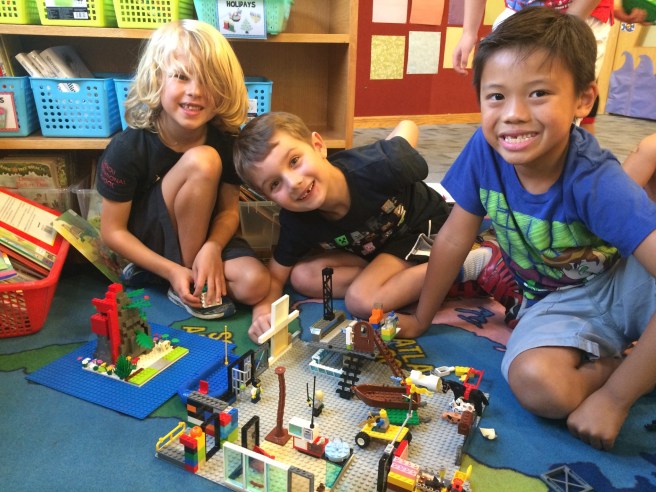
I recently saw an excellent documentary on The Secret World of LEGO and although my dreams of becoming a LEGO creator were relatively crushed, I was reminded of the benefits of LEGO in education. By using LEGO, students are immediately immersed into a world of creativity, inquiry, and innovation. Either building independently or working collaboratively, students are able to use their imagination to create a whole new world and to allow their talents and skills to shine in a variety of ways. At a young age, students become their own builders and makers!

In my last teaching position, grade 5 at Shekou International School, I brought in thousands of LEGO from home and placed them in the back of the classroom. Unfortunately the students and I did not use them to their maximum capacity, however, many students would pull them out and create whenever the opportunity presented itself. More often than not this was during free-time, 20% time, indoor recess, or special projects.

Trolling through Twitter the other day, I saw a great clip on using LEGO for math instruction and immediately saw an endless number of possibilities for using LEGO in the classroom.

Not only with math, but the variety of pieces in any given set allows for creativity in science, social studies, language, art, music…in every curricular area. During 20% time, a group of students used LEGO to make a stop motion movie with their iPads. The amount of collaboration that went into researching, planning, building, creating, filming, editing, and publishing was astounding. Through the use of LEGO and technology, they were able to learn and experience valuable skills that will carry them forward for the rest of their lives.

LEGO Club, during after school activities, is consistently one of the most popular choices for students at our school. Not set up to be complicated, strenuous, or difficult for the advising teacher, students arrive and are able to build and create for 50 minutes. During the first session the teacher will review rules and responsibilities of building and playing with LEGO; the most important of these rules to use one’s imagination and to have fun. The possibility of sharing their creations with others is endless: taking pictures and blogging, making displays in classrooms and hallways, inviting parents and community members for a LEGO celebration, etc. The most important motivation for providing LEGO in education is to encourage creativity, innovation, and collaboration in all students.

“There are many solution to the same problem and you have to imagine your own solution.” ~ Jorgen Vig Knudstorp, Chief Executive Officer, LEGO Group. Understanding the LEGO Group Culture.

Difficult Conversations

Screen Shot 2015-12-11 at 5.48.34 PM

Administrators are occasionally faced with difficult conversations involving different members of the school community. Whether or not it is with colleagues, parents, or students, it is important to approach the conversation with an open mind and to be able to reach an agreement or  understanding by the end of the meeting. Difficult conversations are never easy and can always be an area for personal and professional growth and improvement. Here are 3 tips that you might be able to use when difficult conversations come across your desk!

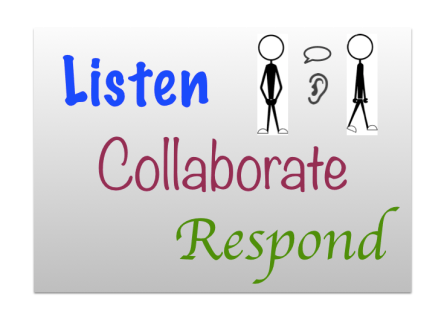
  1. Listen! Leaders are continually reminded of the importance of listening to others, especially involving difficult situations. When emotions are high and conversations turn heated, listening carefully to what the other individual is saying will be your greatest strength. It brings me back to the Adaptive Schools training I had last year where we learned that listening attentively, presuming positive intentions, and paying attention to self and others are quintessential requirements in moving forward toward a solution. It is very easy to turn defensive in difficult conversations and continually challenge and argue, however; truly listening will allow you to take a step back and get the big picture.
  2. Separate out your emotions! Possibly the biggest challenge during difficult conversations is removing our own emotions. Human nature tells us that if we feel directly attacked, our immediate response is to defend ourselves and to take the offensive. There is that moment in difficult conversations when I feel my body temperature rise and the anxiety hits. At that moment, I need to remind myself to breath deeply and listen even more attentively. There is the delicate balance of showing personal emotion through care and concern, but also understanding that the role of administrators is to help support a solution that will often be based on school policies and procedures. There is a grey area here at times, and separating out your own personal emotions will make it easier to respond appropriately and find a solution that serves the best interest of everyone involved.
  3. Appropriate response! During difficult conversations, you may not be able to accommodate all of the needs; however, can you offer or provide something (however small) that will help the process move forward? It is important to have a sense of collaboration during the meeting and find ways to work together toward a solution. The more that others feel involved in the process, the more likely they are to agree on the outcome. People will understand that there are certain parameters within which administrators work under and having the ability to make a small change will go a long way in “showing good faith.” Responses need to be constructive and data driven with the best interest of students at the core.

Most of the time, people just want to be heard. They understand that all of their needs will probably not be met, but the importance of listening and working together will help establish a positive school culture.

Aspiring Administrators – Part 3: Qualities and Characteristics

Screen+shot+2011-09-01+at+11.04.04+PM

What are some qualities and characteristics that can be found in most successful school leaders?

As an aspiring administrator, it is important to start thinking and acting like an administrator! The way you carry yourself today (whether inside or outside of school) will determine how people think of you tomorrow. It is never too late to start molding and shaping who you will be, in the future, as an administrator. Moving into a different role will require a new set of responsibilities that will need to be handled differently. After you share with your current administration that you want to move forward in leadership, their expectations of you will be different and your behavior and attitude will need to adapt as well. I am still growing and learning, on a daily basis, and strengthening those qualities and characteristics that will make me a stronger leader for our school community.

  1. Communicator: One of the best ways to be a strong communicator is through actively listening to others. Too often, young administrators feel as though they need to prove their knowledge. This will come out during meetings and conversations with others, when young leaders spend more time talking than listening. It is humbling, but important, to realize that you are not always the smartest person in the room and listening to other people’s ideas will make you a stronger leader. One of the main responsibilities of a leader is managing change and being able to sort through different thoughts and ideas to help develop a solid plan of action. The quality of a true leader is knowing when to talk and when to listen.
  2. Collaborator: The days of administrators sitting alone in their offices, making decisions void of others, is over. The intelligence of team needs to guide leaders in moving a school and organization forward. Administrators need to work together and set an example that disagreeing on topics and educational philosophy is acceptable and necessary. It is through healthy and respectful questioning and dialogue that teams are able to function and make constructive and positive changes.
  3. Positive Example: As an aspiring administrator, it is time to start thinking of yourself in a different light. Ask yourself, what qualities am I currently representing that define my character? Respect? Truth? Honesty? Knowledge? Care? Passion? You need to be setting a positive example, at all times, with all school stakeholders. Your interactions, inside and outside of school, will be watched closely by others. If there are things that you need to change, now is the time to start. If you are unsure, imagine yourself in the principal’s chair and ask yourself this question, “If I were principal, should I engage in this activity and how should I respond?”
  4. Leadership: Leaders have a presence, and often times, without even knowing its full extent. The best leaders will know and understand that there comes a time when a difficult decision needs to be made, and that they are the ones that need to make it and own it. However, more importantly, they realize that they are part of a larger team and it is their responsibility to make sure that all ideas are heard and valued. Leadership comes naturally and is earned rather than self-proclaimed. Leaders continually stretch their own professional learning through staying current with best practice and sharing their learning with others.
  5. Acceptance: Administrators make mistakes…especially young administrators…and, it is okay to make mistakes! The lessons learned from the mistakes is what will separate good leaders from great leaders. When mistakes are made, many people will already know about it within the school community. Admitting to the mistakes, apologizing for them, and offering a solution on how to move forward will garnish a large amount of respect from others. Leaders are not expected to be perfect (although sometimes it may feel that way), but they are expected to move forward in the best interest of the school and to be an advocate for all stakeholders.
  6. Accountability: Great leaders hold themselves, and others in their organization, accountable for different initiatives and expectations. The idea of accountability and follow-through is very simple: if you say you are going to do it, then do it! However, it is not always that simple, especially when a number of initiatives are being juggled and considered. Staying organized will be key in being able to respond to the different challenges and staying focused on various goals. To take this one step further, I would challenge that finding key people within your school to support different initiatives will be a leaders greatest asset. Leaders can not accomplish everything themselves, they need to be able to tap key players and leaders within their organization to help support and move the school forward.

What qualities and characteristics would you add to the list?

Photo by Leslie Perry @ http://lesliegperry.blogspot.com/

Supporting Teacher Assistants

IMG_0879

Many schools around the world hire teacher assistants to work with classroom teachers. Throughout international schools, more often than not, teacher assistants have the primary responsibility of fulfilling clerical duties (making copies, grading homework, changing bulletin boards, etc.). I believe that teacher assistants need to provide instructional support in the classroom, along with their daily clerical duties. However, the only way to make this change within a school is to provide a framework and practical steps that will inevitably strengthen your school and community.

  1. Make it an expectation! From the very beginning of the school year, communicate the importance of teacher assistants providing instructional support in the classroom. Most likely, assistants will expect that fulfilling clerical duties and transitioning students between classes will be their only responsibility. At the beginning of the school year, during the very first meeting, dialogue about the importance of teacher assistants supporting student learning in the classroom. There may be resistance from one or two that will not want to put in the extra time and effort, however, many teacher assistants are passionate about education and supporting students and they will gladly take on the responsibility of helping all students learn. Have you had meaningful conversations with your teacher assistants and asked which of them would like to become teachers themselves and welcome such responsibility?
  2. Provide meaningful professional development! As an administrator ask yourself this question: when you are having staff meetings, what are your teacher assistants doing? I assume most people will respond that they are in the classroom supporting the teachers. I question, what message this is sending to our TAs? What message do you think it would send to involve teacher assistants in staff meetings and on professional development days? By including TAs in staff meetings, we are recognizing that we value them and that they are an important part of our learning community and overall school goals. I would even take this a step further and involve them in weekly team meetings at the different grade levels. Yes, they may not have the educational background to fully contribute and may not always understand the conversations; however, the more they are exposed to further professional development and growth the more effective they will be in working with teachers and students on a daily basis. At our school, we provide targeted professional development for our teacher assistants. Our own teachers, once a month, deliver interactive sessions to our TAs on working with small groups and/or individual students, using technology in the classroom, conferring with students using the Lucy Calkins Reading and Writing Workshop model, etc.
  3. Check-in and provide feedback! At the beginning of the school year, our teacher assistants are involved in the same goal setting process as our teachers. After completing their goals, teacher assistants meet with administration to discuss the goals and then work together throughout the school year to accomplish them. Whenever I walk into classrooms, I am not only there to watch and provide feedback to teachers and students, but I also take the time to talk with the teacher assistants and provide feedback on their daily interaction and support of students. I praise them on the positive support they are providing as well as offer recommendations of ways they can enhance their support. I use twitter to highlight the wonderful things happening in our classrooms for both our teachers and teacher assistants.

As a closing note, supporting teacher assistants in the classroom is a great opportunity to provide teacher leaders valuable leadership experience. At the beginning of the school year, I spoke with one of our exceptional grade two teachers, Amanda Blankenship, about supporting our work with TAs and she was enthusiastic about setting up and delivering professional development sessions for our TAs. The feedback has been very positive and I do believe the TAs appreciate having a teacher that they can go to for practical classroom questions and support. Our wonderful and talented learning support teacher, Erin Madonna, has also begun training our teacher assistants to provide extra, directed support for our students with specific needs. She meets with them on a weekly basis and supports them with strategies and activities to target individual needs. Recognizing and utilizing teacher leaders for initiatives, such as the importance of teacher assistants as instructional support in the classroom, is a valuable way to move a school forward and promote a culture of collaboration and continued learning.

3 Valuable Lessons in Education

Allow me the opportunity to take a different approach with this blog. I am going to share 3 valuable lessons that I have learned from my dog, Charlie, and highlight how they can support teachers and administrators to be better educators!

IMG_0033

1. The first lesson is from one of my mentors in the canine community – Cesar Millan! After struggling with Charlie for the first six months, we quickly learned from Cesar about discipline, exercise, and affection.

The same lessons can be transferred over into our classrooms when we are working with students. First we must establish clear and consistent expectations in our classrooms. The first few weeks with a new group of students is crucial in establishing routines and expectations for the entire school year. Similarly, as administrators, if we are fair and reasonable with student, parent, and teacher expectations then we are setting up all stakeholders for success. Next, we need to allow students the opportunity to exercise during the school day and to take a break from learning. During this time, students will actively engage in a variety of activities and strengthen their social skills. So, think twice next time before having a student stay in at recess to finish work or as a punishment. Lastly, we need to show affection toward our students for their willingness to learn and create both individually and with their classmates. Setting clear expectations, establishing a culture or respect and openness, and working individually with all students to support their learning will show students how much you care about them as individuals.

2. The second lesson is to think about how we greet people when they enter our classroom or office. Undoubtedly, whenever I enter my apartment door, Charlie is there to greet me with excitement, expectation, and anticipation (even if I am just returning because I forgot my keys). Take a second to think about how you respond when someone steps inside your door. Do you continue staring at your screen and ask them to hold on? Do you stand to greet your visitor and say hello? Do you close your screen and give your visitor your undivided attention? Your initial response to visitors in your classroom or office (whether students or parents or colleagues) can set the tone for the type of interaction you are about to have and the type of learning that is about to take place.

3. The third lesson is that you can indeed, “teach an old dog new tricks”! After six months of chewing walls, shoes, and anything else he could get his mouth around we set clear and consistent expectations. In a short period of time, with proper exercise, we had Charlie trained and didn’t need to worry about the drywall in our hallway anymore. It is extremely important to have classrooms where students are free to explore and create and innovate. Students consistently want to be learning new tricks and going above and beyond expectations. The best part is that all of this new learning does not need to come directly from the teacher. If we provide a variety of learning opportunities and spaces for students, and further provide them the opportunity to share their thoughts and ideas with others, then they are able to reflect upon and be the catalyst of their own learning.

Aspiring Administrators – Part 2: Building Your Portfolio


Screen Shot 2015-11-28 at 8.01.46 AM

In a previous blog, Aspiring Administrators – Part 1, I outlined the importance of sharing with others your desires and ambitions of moving into an administrative role. Now it’s time to get into some more specifics! One of the most important things for aspiring administrators is to …

build your portfolio!

Lets look together at some different ways to build your repertoire and experience and take you one step closer to a principalship.

  1. Serve on different committees/teams. Most likely your current school has a number of different committees that you can be a part of to broaden your experience and strengths. Find those that you are passionate about and start getting involved. Depending upon your school, committees could range from curriculum development to mentoring new teachers to after school activities to school accreditation teams. I recommend getting involved in a number of different committees for a range of experience and also to show others of your desires and commitment. Please be careful not to do too much and burn out. Administrators need to be cautious of balancing quantity with quality and as an aspiring administrator you need to start leading by example.
  2. Obtain an advanced degree in educational leadership. Today, most administrators have an advanced degree in educational leadership or a similar field. These programs, a plethora of which are now offered online, provide aspiring administrators with important knowledge and understanding of current educational reform and best practice. I completed mine through American College of Education and was blown away by the amount of experience I gained during this 18 month online program. It was strenuous and took time and effort to complete, however, when I finished the program I knew that I was better prepared to apply for an administrative role.
  3. Start new programs or initiatives. One way to build respect and leadership among your community is to see a need within your school, be proactive, and help to make positive changes. I was able to accomplish this at a previous school through establishing and maintaining a meaningful teacher induction program. Through this, I was able to share my passion and knowledge with colleagues and begin to establish my role as a leader within the school. I was also fortunate to have a mentor that believed in me and allowed me the opportunity to take on this challenge and succeed (we will discuss this more in future posts).
  4. Deliver professional development sessions. Your colleagues need to begin seeing you as confident and knowledgeable. Talk with current administration and find ways to begin sharing during staff meetings and/or on professional development days. If you are an international school teacher, apply to share on a larger scale such as a conference like EARCOS.  As a future administrator, you will need to stand in front of others and deliver a wide range of information. If you get shy or nervous while presenting, now is the time to practice building a strong, positive stage presence. Like most things in life, practice makes you better.

Hopefully you have been able to take something away from this blog that can move you one step closer to administration. I would love to hear from you if you have other ideas on how to build your portfolio!

Photo courtesy of Pixabay