
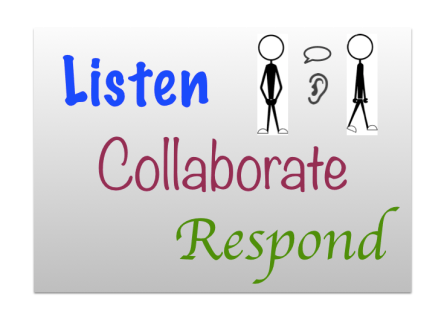
Administrators are occasionally faced with difficult conversations involving different members of the school community. Whether or not it is with colleagues, parents, or students, it is important to approach the conversation with an open mind and to be able to reach an agreement or understanding by the end of the meeting. Difficult conversations are never easy and can always be an area for personal and professional growth and improvement. Here are 3 tips that you might be able to use when difficult conversations come across your desk!
- Listen! Leaders are continually reminded of the importance of listening to others, especially involving difficult situations. When emotions are high and conversations turn heated, listening carefully to what the other individual is saying will be your greatest strength. It brings me back to the Adaptive Schools training I had last year where we learned that listening attentively, presuming positive intentions, and paying attention to self and others are quintessential requirements in moving forward toward a solution. It is very easy to turn defensive in difficult conversations and continually challenge and argue, however; truly listening will allow you to take a step back and get the big picture.
- Separate out your emotions! Possibly the biggest challenge during difficult conversations is removing our own emotions. Human nature tells us that if we feel directly attacked, our immediate response is to defend ourselves and to take the offensive. There is that moment in difficult conversations when I feel my body temperature rise and the anxiety hits. At that moment, I need to remind myself to breath deeply and listen even more attentively. There is the delicate balance of showing personal emotion through care and concern, but also understanding that the role of administrators is to help support a solution that will often be based on school policies and procedures. There is a grey area here at times, and separating out your own personal emotions will make it easier to respond appropriately and find a solution that serves the best interest of everyone involved.
- Appropriate response! During difficult conversations, you may not be able to accommodate all of the needs; however, can you offer or provide something (however small) that will help the process move forward? It is important to have a sense of collaboration during the meeting and find ways to work together toward a solution. The more that others feel involved in the process, the more likely they are to agree on the outcome. People will understand that there are certain parameters within which administrators work under and having the ability to make a small change will go a long way in “showing good faith.” Responses need to be constructive and data driven with the best interest of students at the core.
Most of the time, people just want to be heard. They understand that all of their needs will probably not be met, but the importance of listening and working together will help establish a positive school culture.
 Matthew Johnson
Thank yoou for writing this
LikeLike